Source kitchen scale for Baking, Cooking, and Commercial Weighing
Explore 30 options for the kitchen scale designed for baking, cooking, and commercial weighing. Compare features like accuracy, material, and display types to find the right supplier for your needs.
Key considerations
Products List






Comprehensive Sourcing Guide
Strategic Sourcing Guide for Electronic Kitchen Scales
The global market for electronic kitchen scales has expanded significantly, driven by a demand for precision in culinary arts, commercial baking, and household nutrition management. For B2B procurement professionals, navigating this sector requires a disciplined approach that distinguishes between generic consumer goods and industrial-grade weighing solutions. This guide synthesizes available product data and industry standards to provide a framework for sourcing kitchen scales that meet specific operational requirements while mitigating supply chain risks.
Technical Specifications and Functional Diversity
The first step in any procurement strategy is defining the technical parameters that align with the intended use case. The observed product landscape reveals a distinct bifurcation between high-precision laboratory-style units and general-purpose household models. A critical observation from the current market data is the variance in accuracy ratings. Some units are engineered with an accuracy of 1 gram, suitable for general food preparation, while others offer a precision of 0.1 grams, which is essential for professional baking or pharmaceutical applications.
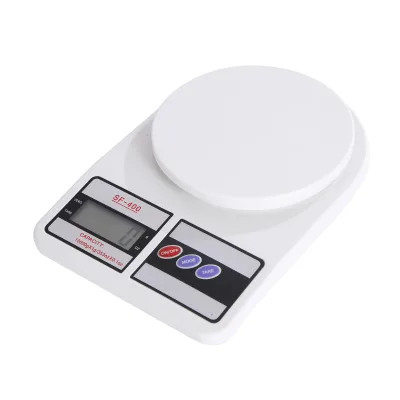
Capacity is another defining specification. The data indicates a maximum weight recommendation of 10 kilograms for several models, with specific product sizes ranging from compact dimensions of 20 by 16.5 centimeters to larger industrial units measuring 52 by 30 by 45 centimeters. The structural integrity of these devices varies; stainless steel construction is a prevalent material choice, offering durability and resistance to corrosion in wet kitchen environments. Conversely, plastic-bodied scales are also available, often prioritizing lightweight portability over heavy-duty industrial use.
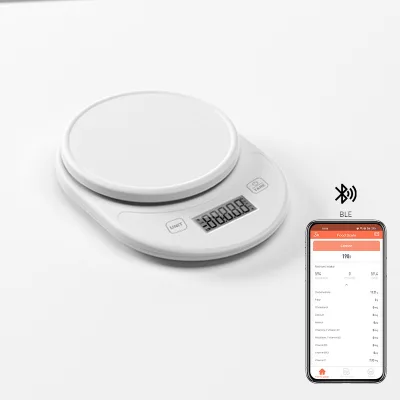
The display technology is a key differentiator in user experience. The market features both LED and LCD display types, with some units offering digital readouts that include specific features like auto-shutoff to conserve battery life. Power sources are predominantly battery-operated, requiring buyers to consider the long-term cost of consumables. When evaluating specifications, procurement teams must verify if the "Automatic" measure method is a standard feature or a specific capability of high-end models, as this impacts the speed of workflow in commercial settings.
Material Composition and Structural Design
Material selection directly influences the lifespan and hygiene compliance of the kitchen scale. Stainless steel is frequently cited as a primary material, providing a robust surface that is easy to sanitize and resistant to chemical degradation from food acids or cleaning agents. This is particularly relevant for commercial kitchens where health codes mandate strict hygiene standards. The shape of the scale also plays a functional role; square and rectangular designs are common, with the latter often optimized for fitting into standard counter spaces or specific baking trays.
The structural design extends to the internal mechanics. Electronic scales rely on load cells and circuitry that must be protected from moisture and physical impact. The "Electronic Scale" structure is standard, but the quality of the housing determines the device's resilience. For instance, a product with a "Portable, Lightweight, Accurate" feature set likely utilizes a different internal architecture compared to a heavy-duty unit with a "2016.53cm" footprint. Buyers should verify that the casing material matches the intended environment; a plastic scale may suffice for a home bakery, whereas a stainless steel unit is mandatory for a commercial processing line.
Compliance, Certification, and Standard Verification
In the realm of B2B procurement, compliance is non-negotiable. While the provided data mentions "CE" certification in a low-confidence context, buyers must treat this as a verification point rather than an established fact. It is the responsibility of the sourcing team to request valid, up-to-date certification documents from the supplier before finalizing any order. The absence of a confirmed certification status in the general data underscores the need for rigorous due diligence.
Furthermore, product standards regarding dimensions and performance must be validated against local regulations. The data lists specific product standards such as "2016.53cm" and "2215.51.5 cm," which likely refer to physical dimensions rather than regulatory standards. Procurement professionals should not assume these dimensions represent a universal standard but rather specific model specifications. Buyers must verify if the scale meets the legal metrology requirements of the destination country, particularly regarding trade accuracy for commercial transactions. If the scale is intended for "Trade" use, it may require specific legal-for-trade certification, which is distinct from general accuracy claims.
Cost Drivers and Pricing Dynamics
Understanding the cost structure of kitchen scales is essential for budgeting and margin analysis. The observed price range in the market spans from $1.16 to $20.00 USD. This wide variance is driven by several factors, including material composition, accuracy levels, and brand positioning. Stainless steel models with higher accuracy (0.1g) and advanced features like auto-shutoff will naturally command a higher price point compared to basic plastic units with 1g accuracy.
Minimum Order Quantity (MOQ) is a significant cost driver in B2B transactions. The data indicates an MOQ range of 1 to 2,500 units. For suppliers offering OEM services, the MOQ may be higher, with specific instances noting an OEM MOQ of 1,000 pieces and a standard MOQ of 200 or 500 pieces. These thresholds directly impact the unit cost; higher volumes typically reduce the per-unit price. Buyers must calculate the total cost of ownership, including the potential for overstocking if the MOQ is set too high for their current demand. Additionally, packaging costs, such as "1PCS/Box" or "Carton" packaging, should be factored into the logistics budget, as they affect shipping volume and handling efficiency.
Supplier Evaluation and Operational Capabilities
Selecting the right supplier requires a deep dive into their operational capabilities and customization options. The data confirms that customization is available, which is a critical feature for brands looking to differentiate their products. Suppliers offering "OEM" services allow for branding and design modifications, but this often comes with higher volume requirements. Buyers should evaluate the supplier's ability to handle these customization requests without compromising quality or lead times.
The origin of the product is another vital factor. The data points to "Zhejiang, China" as a primary place of origin for these scales. While this region is known for its manufacturing ecosystem, buyers must assess the specific factory's capacity and reliability. A supplier with a "Service: OEM" designation should be able to provide a clear roadmap for production, from raw material sourcing to final assembly. It is also important to verify the supplier's track record in handling "Household Home Kitchen Weighing Scale" orders versus "Commercial" orders, as the quality control processes may differ significantly between these segments.
Quality Control and Performance Verification
Quality control (QC) is the backbone of a successful procurement strategy. Given the variance in accuracy (1g vs. 0.1g) and material (Stainless Steel vs. Plastic), a standardized QC protocol is necessary. Buyers should implement a sampling plan that tests for accuracy across the full weight range, ensuring the scale reads correctly at zero, at the midpoint, and at the maximum capacity. The "Automatic" measure method should be tested for consistency and response time.
Performance claims such as "Portable, Lightweight, Accurate" must be verified through independent testing. For electronic scales, battery life and display readability under various lighting conditions are critical performance metrics. The "Auto Shut off" feature, while convenient, should be tested to ensure it does not interrupt critical weighing processes prematurely. In a commercial setting, the durability of the scale under repeated use is paramount. Buyers should request test reports or samples that demonstrate the scale's ability to withstand the specific stresses of the intended application, whether it is "Baking," "Kitchen Cooking," or general "Home" use.
Long-Term Procurement and Strategic Planning
Sourcing kitchen scales is not merely a transactional activity but a strategic decision that impacts long-term operational efficiency. Buyers should consider the lifecycle of the product, including the availability of spare parts and the ease of maintenance. Electronic scales with complex circuitry may require specialized repair, whereas simpler mechanical or basic electronic models might be easier to replace entirely.
The "Selling Units" being listed as "Single item" suggests a flexible supply chain, but for large-scale procurement, establishing a long-term contract with a supplier who can guarantee consistent quality and volume is advisable. The "Product Size: S" and other dimensional data should be used to optimize storage and shipping logistics. Furthermore, buyers should monitor the market for emerging trends in battery technology and display efficiency to ensure the sourced products remain competitive. By maintaining a flexible relationship with suppliers who offer customization and OEM services, procurement teams can adapt to changing market demands and customer preferences over time.
Comparative Analysis of Key Product Attributes
To facilitate decision-making, the following table summarizes the key attributes observed in the market data, highlighting the trade-offs between different product categories.
| Attribute Category | High-Precision Commercial Model | General Household Model |
|---|---|---|
| Accuracy | 0.1 g | 1 g or 0.1 kg |
| Material | Stainless Steel | Plastic |
| Maximum Capacity | 10 kg | 10 kg |
| Display Type | LCD / LED Digital | LCD / LED Digital |
| Shape | Square / Rectangle | Rectangle |
| Power Source | Battery | Battery |
| Special Features | Auto Shut off, OEM Available | Portable, Lightweight |
| Typical MOQ | 500 - 1000 pcs (OEM) | 1 - 200 pcs |
| Primary Application | Baking, Commercial | Home, Kitchen Cooking |
This comparison illustrates that while capacity may be similar across models, the accuracy and material composition are the primary differentiators. Procurement teams must align these attributes with their specific operational needs to ensure value for money.
Conclusion
Sourcing electronic kitchen scales requires a balanced approach that considers technical specifications, material durability, and supplier capabilities. By rigorously verifying accuracy, compliance, and customization options, buyers can secure a supply chain that delivers reliable performance. The wide range of available products, from basic household units to precision commercial scales, offers flexibility, but it also demands a disciplined evaluation process. Ultimately, the success of a procurement strategy lies in the ability to match the right product specifications with the specific demands of the end-user, ensuring that every unit delivered meets the highest standards of quality and functionality.
FAQs
What accuracy levels are available for kitchen scales?
Kitchen scales are available with accuracy levels of 1 gram or 0.1 gram depending on the model. Higher precision units are suitable for professional baking, while standard models work for general household weighing tasks.
Which materials are commonly used for kitchen scale construction?
Stainless steel and plastic are the primary materials used for kitchen scale construction. Stainless steel offers durability and corrosion resistance for commercial environments, while plastic models prioritize lightweight portability for home use.
Can I customize kitchen scales with my own brand name?
Yes, customization is available for kitchen scales through OEM services. Buyers should note that OEM orders typically require a higher minimum order quantity, often starting at 1000 pieces compared to standard orders.
What is the maximum weight capacity for these electronic scales?
The maximum weight recommendation for these electronic scales is typically 10 kilograms. Some models feature specific dimensions like 52 by 30 by 45 centimeters to support this capacity effectively.
How are these kitchen scales powered and displayed?
These scales are powered by batteries and feature either LED or LCD digital displays. The automatic measure method ensures quick readings, and many units include an auto-shutoff feature to conserve battery life.
What is the typical minimum order quantity for these products?
The minimum order quantity ranges from 1 to 2500 pieces depending on the supplier and customization needs. Standard orders may start at 200 or 500 pieces, while OEM requests often require 1000 pieces.
Where are these kitchen scales manufactured?
These kitchen scales are primarily manufactured in Zhejiang, China. Buyers should verify specific factory details as this region is a known hub for producing electronic weighing devices for both domestic and international markets.